Updated August 6, 2026
Quick answer: If hail, wind, or a hurricane damaged your roof, homeowner's insurance typically covers replacement minus your deductible. Document the storm date, get a free inspection, file promptly, and have your roofer present at the adjuster meeting. In Texas it is illegal for a contractor to waive or absorb your deductible — treat any such offer as a walk-away red flag.
What's covered — and what isn't
- Covered: sudden storm damage — hail bruising, wind-lifted or missing shingles, hurricane damage, fallen trees, and interior water damage that results.
- Not covered: age, wear, granule loss from normal weathering, neglect, and pre-existing leaks. If your roof is simply old, that's a replacement you budget for, not a claim.
- Named-storm deductibles: most Houston-area policies carry a separate wind/hail or named-storm deductible of 1–2% of your dwelling coverage. On a $400,000 dwelling that's $4,000–$8,000 out of pocket — know your number before you file.
The process, step by step
- Pin the storm date. Claims are tied to a date of loss. Houston's recent big ones — the May 16, 2024 derecho and Hurricane Beryl (July 8, 2024) — are well documented; for hail, NOAA storm reports for your ZIP work as evidence.
- Document everything before touching anything. Ground photos, interior stains, dated smartphone shots. If water is coming in, tarp it (that's covered mitigation — keep receipts) but don't start repairs.
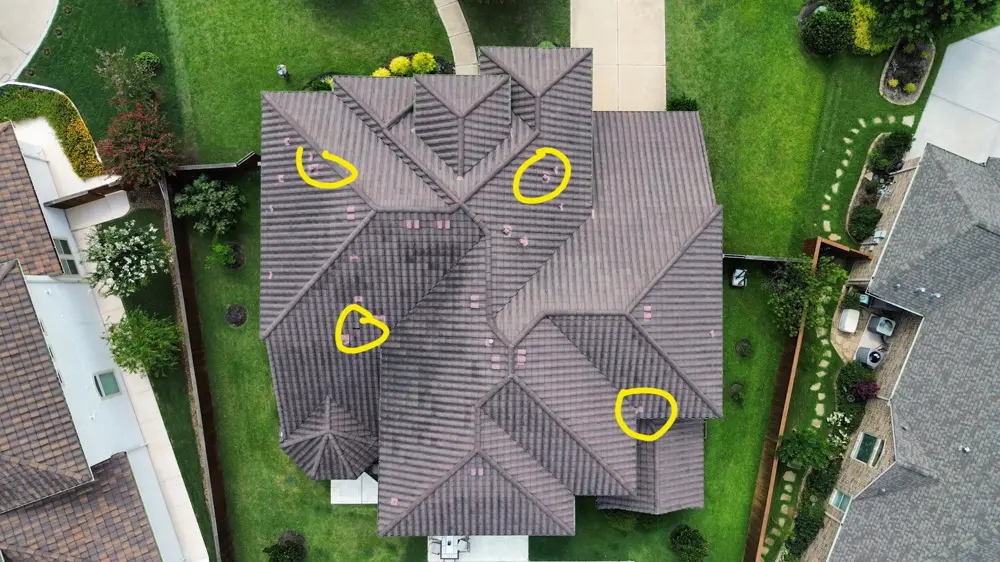
- Get a professional inspection. A reputable local roofer will document hail strikes and wind creasing per slope, photograph test squares, and tell you honestly whether the damage clears claim threshold. Half of storm-damaged Houston roofs we see don't — a repair is cheaper than a deductible.
- File promptly with your carrier. Prompt-notice clauses are enforced, and Texas policies typically allow one to two years from date of loss at most.
- Be at the adjuster meeting — with your roofer. The adjuster works from what they can see and reach. A roofer on-site ensures every slope, soft metal, and accessory is inspected and that the scope isn't quietly reduced.
- Review the estimate and understand RCV vs. ACV. With replacement-cost coverage, the insurer pays actual cash value first and releases recoverable depreciation after the roof is installed and invoiced.
- Choose your contractor yourself. You're never required to use an insurer-suggested vendor, and no legitimate roofer needs you to sign a contract before the claim is approved.
Texas rules that protect you
- Deductible law: since 2019 (HB 2102), it's a criminal offense for a contractor to waive, absorb, or rebate your deductible. Insurers may require proof you paid it before releasing depreciation.
- No public-adjusting by roofers: Texas roofers cannot legally negotiate your claim for you — that's the licensed role of a public adjuster. A roofer can document damage and meet the adjuster; anyone promising to "handle the whole claim" is over the line.
- Prompt-payment deadlines: the Texas Department of Insurance enforces the Prompt Payment of Claims Act, which sets statutory clocks — acknowledgment within 15 days of your claim, an accept/reject decision generally within 15 business days after they get your documentation, and payment within 5 business days of acceptance.
- Storm-chaser hygiene: after big events, out-of-state crews canvass Houston hard. Verify a local physical address, liability insurance certificate, and references from jobs older than five years. Never pay a large deposit to a door-knocker.
Coastal note: TWIA
Standard policies exclude windstorm in Texas's 14 designated coastal counties. Most of Harris County carries wind on the regular policy, but if you're in a designated coastal zone (parts of southeast Harris near the bay, plus Galveston and Brazoria counties toward Pearland's south), wind coverage may run through the Texas Windstorm Insurance Association with its own deductibles and inspection requirements (WPI-8 certificates for roof work).